The Doctor is Out
On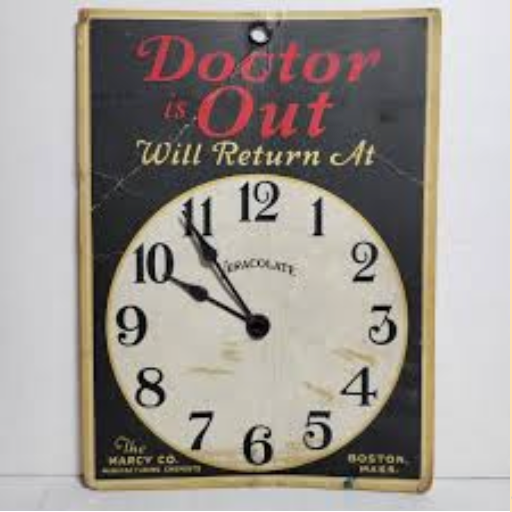
Why are so many doctors so resistant to nutrition, let alone pharmaconutrition, when diet-related disease is the leading cause of death in the world (1, 2)?
Is it the continuing failure of the biggest sellers, fish oil and multivitamins, to show material benefits (3)? The persistent problems with quality control (4-7), the unsubstantiated claims (8, 9)? Or something more profound?
We cannot know who we are unless we know where we come from; so let us gaze into the glaze of the rear-view mirror, until it gazes back into our souls.
The history of medicine, like much of the history of our kind, comes from a dark place. It is a long night of ignorance, cruelty and mediocrity, shot through with occasional flashes of brilliance and kindness. I submit that the archetypical duality of Dr Jekyll and Mr Hyde is grounded neither in Marxist nor psychoanalytical theory (though Robert Louis Stephenson was undoubtedly aware of both), but in historical reality.
They professed to heal but until recently, doctors were murderers. The plague doctors, for example, had little for the sick other than bleeding, purging, poisoning and the microbes they unknowingly transmitted between patients. They were disease vectors, transmitting death and chickens (10) wherever they went.
They were also torturers. Surgery was carried out on the patient while fully conscious, unless he or she could afford enough strong drink to dampen the pain. Legs, arms and other extremities were hacked off while the patient was restrained by the surgeon’s assistants, brute strength and speed their only qualifications.
In 1799, the chemist Humphry Davy discovered the euphoric effects of nitrous oxide. He wrote about its potential to relieve pain and in 1800 suggested it could be used as an anesthetic for surgery (11). A generation of doctors ignored this. NO2 was used exclusively as a recreational drug until 1844, when the Boston dentist Horace Wells self-experimented with the gas to demonstrate painless dental extraction.
Horace became addicted to the more potent inhalants chloroform and ether, which had recently arrived, and killed himself with chloroform four years later. His deeply unattractive student William Morton worked primarily with ether, and his aggressive and unscrupulous pursuit of fame and money (12) gained him, I think wrongly, the title of father of general anesthesia.
Surgeons stopped being full-time torturers. I was knocked out by a Schimmelbusch-wielding paediatric surgeon in 1955, and vividly remember the chill, familiar wind of ether in my sinuses – familiar because my father, a geneticist, used ether to terminate his endless fruit fly experiments.
General anaesthetics gave a push to the concept of medical specificity, but not as much as did the discovery of germ theory, antisepsis and the antibiotics.
Spare a thought for Ignatz Semelweis. The first to identify doctors as disseminators of disease, his insistence on medics washing their hands between patients cut mortality rates on his maternity wards from 25-30% to below 1%. Ignaz was a truly innovative thinker, and for his pains was incarcerated in a mental asylum where his jailors beat him so badly that he died, aged 47, from the sepsis he knew so well.
That was 1861. The very next year Louis Pasteur carried out his famous studies with swan-neck flasks, laying the foundation for germ theory. In 1864 the surgeon Robert Lister saw microscopic ‘dots’ in the suppurating wounds of his patients and, influenced by Pasteur’s work, first used carbolic acid to sterilise surgical wounds.
Pasteur met the German microbiologist Robert Koch in London in 1881. Pasteur’s germ theory was formally announced later that year and Koch, who reckoned that different and specific bacteria must be responsible for different infections, gave us Koch’s Postulates in 1884. That same year Hans Christian Gram developed the first stains that visualised different microbes, and in 1905 Paul Ehrlich, who knew of Gram’s work (and knew Koch personally), started a search for compounds which would not only bind to bacteria selectively but also kill them.
In 1908 Ehrlich coined the phrase zauberkugel, or ‘magic bullet’. In 1909 he announced that number 606 in a series of arsenical compounds displayed, at last, sufficient selectivity to kill microbes without killing too many patients (13). Salvarsan was first used commercially in 1910, and in 1940 Edward G Robinson played the lead role in the Hollywood film ‘Dr Ehrlich’s Magic Bullet’. This was, in my opinion, Edward G’s finest performance.
I’m missing out a lot. The sulpha drugs arrived in 1935 and penicillin in 1943, thanks to Domagk, Fleming, Chaim, Florey and many others; but magic bullets were already a medical leitmotif and the solution to all illness. The nascent pharmaceutical industry grew from an estimated $150 million in drug sales in 1940 (14) to $1.8 trillion in 2024 (15).
This was not an unalloyed triumph. Adverse drug reactions became a leading cause of death worldwide (16). More worryingly, chronic non-communicable diseases became ever more frequent, occurring in progressively younger groups of patients (ie 17).
These were the first clues that synthetic magic bullets were neither curative nor preventative for the non-communicable diseases, and that these were not diseases in the Koch’s Postulates sense but syndromes. These syndromes had multiple risk factors, and were driven by multiple metabolic errors caused by the modern diet. They were therefore inherently unsusceptible to magic bullets, but by now the medical model had incorporated specificity into its dominant paradigm, medical training and practice.
Pharmaceuticals spread like a gliobastoma through the medical mindset, distracting doctors from addressing the growing harm done to public health by an increasingly predatory and destructive food industry (18-20).
And then, unwittingly, doctors turned the magic bullets on themselves. They started to feed their medical algorithms and clinical experience into AI systems, hoping to improve the precision of their pharmacocentric model of healthcare.
Medicine is precisely the sort of bounded field with complex inputs and measurable outcomes where human cognition cannot compete with AI. AIs now out-perform teams of specialists in making correct diagnoses, and committing fewer errors. OpenEvidence recently scored 100% on the United States Medical Licensing Examination (21), which is far beyond any human performance.
Doctors are enthusiastic – at least, for now.
From the OpenEvidence website (22); ‘OpenEvidence continues to grow by over 75,000 new verified U.S. clinician registrations each month. Aside from Google itself, there has never been a piece of technology adopted by clinicians as quickly as OpenEvidence. More than 100 million Americans this year will be treated by a doctor who used OpenEvidence’.
But is this a solution, a problem, or both? Could it be that the medical profession is clasping an e-serpent to its bosom?
Medics, particularly those working in larger hospital systems, have lost many degrees of freedom. Pressured to use diagnostic and therapeutic algorithms, their autonomy is reduced to the point where they have catalyzed their own replacement. Not only is OpenEvidence more accurate, it never sleeps. It doesn’t become addicted to painkillers, double bill or conduct disruptive affairs with the nursing staff. And it is significantly cheaper.
The usual arguments appear to be no more than pale neo-Luddism. (Original Luddism was more coherent).
‘AIs will not replace human agents because they lack empathy.’
I don’t buy this at all. AIs fake it well enough to make it for Gen Z and the millenials (23), and the more IT-sceptical boomers are dying out.
‘AI tools lack the capacity for the nuanced, “common-sense” clinical judgment and gut instinct, and they cannot handle ambiguity’.
Hmm. These too can be learned. See (21, 22), above.
‘Only licensed human physicians can assume legal and ethical responsibility for patient care and diagnostic decisions’.
Is this really how business operates? When the cost / benefit equations make it good business to replace human medics, legal systems will be changed and expensively trained and salaried humans will be replaced.
“AI is not going to replace doctors, but doctors using AI will replace doctors who aren’t using AI”.
Sure. Until it is realized that removing human agents from the process does not reduce accuracy, but does reduce costs …
‘In our increasingly sick society, we will need more doctors rather than fewer.’
I don’t think so. Early and home-use low-cost diagnostics plus a growing understanding of the links between the exposome and chronic degenerative disease make effective public health prophylaxis possible; and will hugely reduce the need for chronic health care.
The end of the current medical model slouches into view. Today’s medical experts will follow the plague doctors and fade, white-coated, into history. As food companies come to understand that they can take over and profit from an increasingly large part of the health market, hospitals, clinics and drug companies will go out of business.
The point of delivery of healthcare will shift to the mobile phone, Amazon, E-Bay and the supermarket checkout. Health will be disintermediated.
And we will all be healthier.
References:
- The US Burden of Disease Collaborators. The state of US health, 1990-2016: burden of diseases, injuries, and risk factors among US states. JAMA. 2018;319:1444-1472.
- GBD 2017 Diet Collaborators. Health effects of dietary risks in 195 countries, 1990-2017: a systematic analysis for the Global Burden of Disease Study 2017. Lancet. 2019 May 11;393(10184):1958-1972. doi: 10.1016/S0140-6736(19)30041-8.
- https://drpaulclayton.eu/blog/why-i-hate-supplement/
- US Government Accountability Office. Herbal Dietary Supplements: Examples of Deceptive or Questionable Marketing Practices and Potentially Dangerous Advice. Washington, DC: US Government Accountability Office; 2010. pp. 10–662T
- Newmaster SG, Grguric M, Shanmughanandhan D, Ramalingam S, Ragupathy S. DNA barcoding detects contamination and substitution in North American herbal products. BMC Med. 2013;11:222–235
- Miller RK, Celestino C, Giancaspro GI, Williams RL. FDA’s dietary supplement cGMPs: standards without standardization. Food Drug Law J. 2008;63(4):929–942.
- LeBlanc ES, Perrin N, Johnson JD, Jr, Ballatore A, Hillier T. Over-the-counter and compounded vitamin D: is potency what we expect? JAMA Intern Med. 2013;173(7):585–586.
- Crawford SY, Leventis C. Herbal product claims: boundaries of marketing and science. J Consumer Marketing. 2005;22(7):432–441.
- Denham BE. Dietary supplements—regulatory issues and implications for public health. JAMA. 2011;306(4):428–429.
- https://www.worldhistory.org/article/1540/medieval-cures-for-the-black-death/
- Davey H. Researches, Chemical and Philosophical, chiefly concerning Nitrous Oxide and its Respiration, p 556. (1800). “As nitrous oxide in its extensive operation appears capable of destroying pain, it may probably be used with advantage during surgical operations in which no great effusion of blood takes place.“]
- Wolfe, Richard J. ‘Tarnished Idol. William Thomas Green Morton and the Introduction of Surgical Anesthesia. A Chronicle of the Ether Controversy.’ San Francisco: Norman Publishing, 2001.
- Gelpi A, Tucker JD. The magic bullet hits many targets: Salvarsan’s impact on UK health systems 1909-1943. Sex Transm Infect. 2015 91(1):69-70
- Younkin P. Making the Market: How the American pharmaceutical industry transformed itself during the 1940s. UC Berkeley: Center for Culture, Organizations and Politics – Previously Affiliated. (2008). Retrieved from https://escholarship.org/uc/item/2g67r185
- https://www.fortunebusinessinsights.com/impact-of-covid-19-on-pharmaceuticals-market-102685
- Le Louët H, Pitts PJ. Twenty-First Century Global ADR Management: A Need for Clarification, Redesign, and Coordinated Action. Ther Innov Regul Sci. 2023 Jan;57(1):100-103.
- Watson KB, Wiltz JL, Nhim K, Kaufmann RB, Thomas CW, Greenlund KJ. Trends in Multiple Chronic Conditions Among US Adults, By Life Stage, Behavioral Risk Factor Surveillance System, 2013-2023. Prev Chronic Dis. 2025 Apr 17;22:E15.
- GBD 2023 Disease and Injury and Risk Factor Collaborators. Burden of 375 diseases and injuries, risk-attributable burden of 88 risk factors, and healthy life expectancy in 204 countries and territories, including 660 subnational locations, 1990-2023: a systematic analysis for the Global Burden of Disease Study 2023. Lancet. 2025 Oct 18;406(10513):1873-1922.
- Monteiro CA, Louzada ML, Steele-Martinez E, Cannon G, Andrade GC, Baker P, Bes-Rastrollo M, Bonaccio M, Gearhardt AN, Khandpur N, Kolby M, Levy RB, Machado PP, Moubarac JC, Rezende LFM, Rivera JA, Scrinis G, Srour B, Swinburn B, Touvier M. Ultra-processed foods and human health: the main thesis and the evidence. Lancet. 2025 Nov 18:S0140-6736(25)01565-X.
- Nguyen KH, Glantz SA, Palmer CN, Schmidt LA. Tobacco industry involvement in children’s sugary drinks market. BMJ. 2019 Mar 14;364:l736.
- Kung TH, Cheatham M, Medenilla A, Sillos C, De Leon L, Elepaño C, Madriaga M, Aggabao R, Diaz-Candido G, Maningo J, Tseng V. Performance of ChatGPT on USMLE: Potential for AI-assisted medical education using large language models. PLOS Digit Health. 2023 Feb 9;2(2):e0000198.
- https://www.openevidence.com/announcements/openevidence-creates-the-first-ai-in-history-to-score-a-perfect-100percent-on-the-united-states-medical-licensing-examination-usmle
- https://www.theguardian.com/tv-and-radio/2025/jul/12/i-felt-pure-unconditional-love-the-people-who-marry-their-ai-chatbots
Anyone interested in nutritional biochemistry and its therapeutic applications will find much more detail here:
https://www.nutriscienceacademy.com/ressources-de-confiance