Bad Coke Habit
On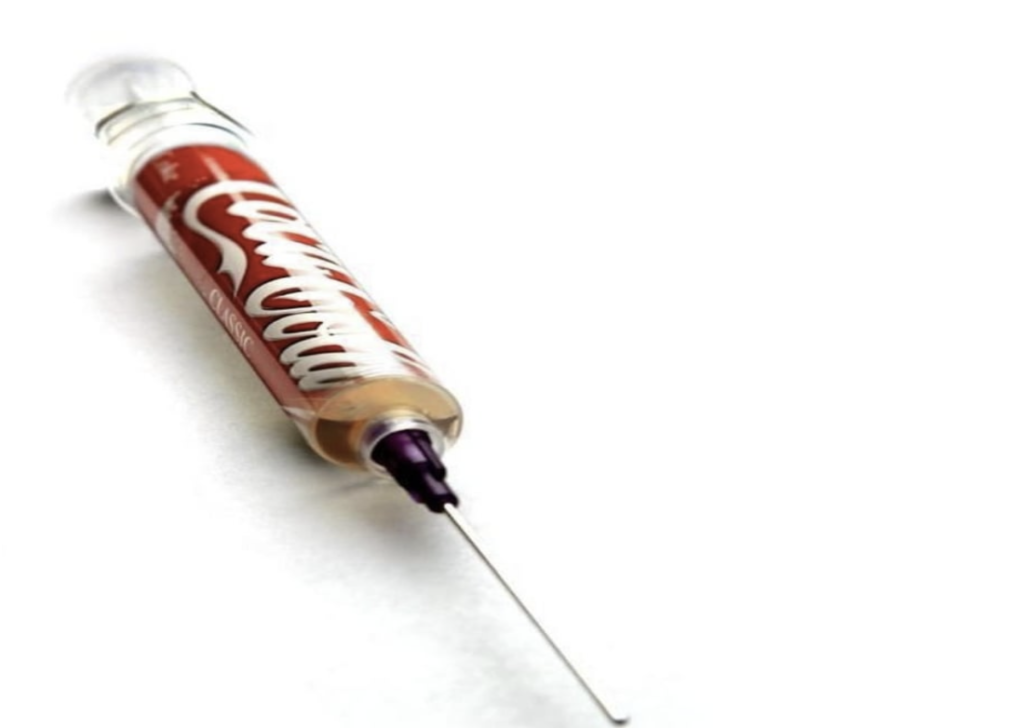
Things don’t go better with Coca Cola. At all.
A growing body of evidence puts the Atlanta-based ‘total beverage company’, and rivals PepsiCo and Keurig Dr Pepper, close to the centre of global declining health. Even the CDC, a conservative body currently under timely revision by Bobby Kennedy’s Make America Healthy Again movement, concedes that sugar-sweetened beverages (SSBs) are the leading source of added sugars in the American diet, and that people who consume these regularly are more likely to develop non-communicable diseases (1).
The situation is broadly similar in Mexico (2), Canada (3), and almost everywhere else around the globe (4). Coke is teaching the world to sing, on their way to the grave, years before their time and consuming unholy amounts of health care as they go.
If anything, PepsiCo and JAB Holdings, who own Keurig/Dr. Pepper, are worse. They pair their drinks with a portfolio of ultra- processed junk foods, selling a dual insult to a sickening planet.
A new study from Tufts University in Boston (5) suggests that approximately one in 10 new cases of Type 2 diabetes and one in 30 new cases of cardiovascular disease are linked to SSBs. The authors calculated that between 1990 and 2020 Coke, Pepsi, Dr Pepper and their fellow poisoners were responsible for approximately 12.5 million years of healthy life lost to disease.
The major soft drink companies are a sub-set of Big Food, but to simplify matters I will refer to them hereinafter as Big Gulp.
Growing awareness of health issues in the developed nations and pending regulatory initiatives (7) have contributed to flat or declining domestic sales. Following in the footsteps of their nicotine-stained cousins, Big Gulp are now pushing their product into emerging markets where populations are still susceptible to aspirational Western brands.
Developing nations including Colombia, Mexico, and South Africa are among the hardest hit. In Colombia, half of new diabetes cases and a quarter of new cardiovascular disease cases have been linked to SSB consumption (6).
In regional terms, Latin America is among the most victimised. Badly infected by Coca-colonisation, economic losses due to increased health care spending and lost productivity in the period 2030-2050 are predicted to soak up 4% of the entire area’s GDP (6). The Middle East is almost equally damaged (7).
And then there is kidney and liver disease (8).
Free sugars are a known risk factor for fatty liver disease, more correctly metabolic dysfunction-associated steatotic liver disease or MASLD (8-10). According to new UK Biobank research which is still in poster form (11), a single can of an SSB is enough to raise the risk of MASLD significantly. And this fits the Tufts data quite well, because ..
.. MASLD increases the risk of Type 2 diabetes (12), cardiovascular disease (13) and renal disease (14). Conversely, diabetes increases the risk of cardiovascular disease (15) and MASLD (16). Together, these conditions form an interactive pathology termed Cardio-Renal-Liver-Metabolic Syndrome (17). This morbid network involves insulin resistance, chronic inflammation, dysbiosis and dyslipidaemia, and is largely driven by diet with a side-helping of inactivity.
From a mechanistic / pharmaconutritional perspective, this makes perfect sense.
Drinking 10% sugar solutions creates glycemic spikes in the blood. These glycemic spikes drive inflammation (18-21), vascular damage (18), dyslipidaemia (21-23) and dysbiosis (23, 24). There is also good evidence that prolonged insulin signalling (too many SSB’s, especially in the context of a high GL diet) leads to insulin resistance (25, 26), which switches on down-stream inflammatory cascades (27). This in turn is likely to increase the risk of a range of clinical inflammatory disorders (28-32).
A sedentary lifestyle makes all the above connections worse (23-36).
This is why Cardio-Renal-Liver-Metabolic Syndrome now affects the majority of US adults, with over 90% showing signs of impaired cardiometabolic health (37). But there is a paradox buried in these weeds.
The Tufts study (5) excluded zero-calorie artificially sweetened drinks from their analysis and ascribed the increase in cardiovascular and diabetic disease to SSBs. The British BioBank study (11), on the other hand, found that switching to artificially sweetened zero-calorie drinks was associated with a higher risk of liver damage.
This was a large study; 123,788 ‘healthy’ subjects were followed for 10.3 years. However, size isn’t everything.
MASLD is an independent risk factor for cardiovascular disease, diabetes and renal disease (12-14). If the Biobankers were right you would expect the intense sweeteners, a very diverse group of molecules, to be linked to increased death from multiple causes in humans. Considering that roughly 1 in 4 Americans consume low-calorie drink products (38), the number of deaths linked to these compounds should be substantial and the connection clear – but they are not, and it is not.
The BioBank folk found an association between consumption of sweeteners and MASLD, but no causative link, and their suggested mechanisms of action seem implausible. The authors mention insulin responses (but these are larger with sugar); dysbiosis (but this is already extremely prevalent (39-41); and increased sweet cravings (but sugar consumption in the UK is in long-term decline (42).
Their last and rather undigested theory is that sugary drinks may replace healthier options, resulting in people missing out on essential nutrients. This can lead to malnutrition, weight gain, and inflammation.’ Well, duh. Look around you. This is the very definition of the post-transitional landscape …
I think it is more likely that consumers of zero-calorie beverages were choosing them because they were already overweight, or had glycemic control issues (see also 30, 31, 43). I admit that I can’t prove this, which illustrates a more general point; association may not be causation, especially if there is no plausible mechanistic link. Consider, for example, the diet soda / dementia link.
A 2017 paper (44) found that drinking diet soda (but not SSBs) was associated with an increased risk of stroke and dementia. More recently, the Northern Manhattan Study (NOMAS) discovered a four-fold increase in the risk of developing dementia, among dementia-free individuals, in those who may have consumed more than one diet soda per day for a decade (43); but here again, the SSBs came out as innocent.
Convinced now that sweeteners are the root of all evil? You shouldn’t be. In the NOMAS trawl, the increased risk showed in whites and blacks but not Hispanics. That’s a major red flag, and the NOMAS findings were further weakened when excluding diabetes and obesity removed the association altogether.
My message to non-scientists would be, don’t let your hatred of intense sweeteners cloud your judgement. The mechanistic evidence that sugar spiking is bad for you is extensive, while that for the artificial sweeteners is diffuse at best. NO MÁS conexiones sin mecanismo!
In the meantime, should we continue to allow SSBs to flood our markets? The social costs, after all, are huge (6, 7). The more Pepsi and coke thrive, the more we die.
Various regulatory bodies monitor different aspects of food safety. In the United States these are the FDA, the USDA’s Food Safety and Inspection Service, and the CDC. None of them did anything until, last year, Bobby Kennedy and the MAHA movement forced their hands. Waivers have now been approved for 18 states to prevent SNAP card benefits from being used to purchase SSBs and other junk foods (45).
I wish MAHA well but sadly, I doubt this will work.
SNAP cards will be used to make healthier purchases that will subequently be bartered for the ultraprocessed foods that so many are addicted to. Big Food and Big Gulp will lobby politicians, who prioritise cash over constituents, to restore SNAP privileges. Liberals will howl about the loss of freedom to maintain a junk food habit, and being coerced to lead healthier lives. (And I do see their point, up to a point.)
But the food market is being changed anyway, by the GLP1 agonists.
The side effects of Mounjaro, Wegovy et al include a sharp decline in junk food consumption. There has been a fall of 10% in snack categories and fast foods with a shift to proteins, yoghurt, fruit and veg (46, 47). And it will likely continue; by 2034, one in five US adults are predicted to be using a GLP-1 agonist (46, 47).
Big Food and Gulp worry about lost revenue, changing production lines and new reasons for mergers and acquisitions (48). The companies behind them, however, aren’t concerned.
Coca-Cola and JAB are their own thing, but lurking behind Pepsi are the usual suspects: Black Rock, Vanguard, and State Street, the same people who effectively own healthcare and the pharmaceutical industry (49). What they lose on the swings, they will gain on the roundabouts. After all, they own the playground.
They have unlimited funds, and they have time. They know that the majority of GLP-1 users stop their medication within the first 12 months, mostly because of cost and side effects (50). Once these consumers stop there is accelerated weight gain, and all their cardiovascular risk markers rebound (51-53). Followed by another cycle of Wegovy, weight loss and regain, another step towards sarcopenia (54), debility, further drug dependence and an early death.
The sick interdependency of food and pharma is very clear in this instance. Big GLP-1 is the spawn of Big Gulp.
This mouth-watering market will be expanded by the next generation, who Big Gulp targets relentlessly (ie 55-57). Thanks to this aggressive targeting 30% of US adolescents now have prediabetes or type 2 diabetes (58) and a reduced health expectancy which no drugs will be able to prevent.
To escape this singularly vicious circle will require extensive re-imagining and re-structuring of the food and health landscapes. I have dedicated the last half-century of my life towards these twin goals, and will continue the struggle for whatever time I have left.
References
- https://www.cdc.gov/healthy-weight-growth/rethink-your-drink/index.html
- Sánchez-Pimienta TG, Batis C, Lutter CK, Rivera JA. Sugar-Sweetened Beverages Are the Main Sources of Added Sugar Intake in the Mexican Population. J Nutr. 2016 Sep;146(9):1888S-96S.
- Liu S, Munasinghe LL, Ohinmaa A, Veugelers PJ. Added, free and total sugar content and consumption of foods and beverages in Canada. Health Rep. 2020 Oct 21;31(10):14-24.
- Malik VS, Hu FB. The role of sugar-sweetened beverages in the global epidemics of obesity and chronic diseases. Nat Rev Endocrinol. 2022 Apr;18(4):205-218.
- Lara-Castor L, O’Hearn M, Cudhea F, Miller V, Shi P, Zhang J, Sharib JR, Cash SB, Barquera S, Micha R, Mozaffarian D; Global Dietary Database. Burdens of type 2 diabetes and cardiovascular disease attributable to sugar-sweetened beverages in 184 countries. Nat Med. 2025 Feb;31(2):552-564.
- Pan American Health Organization. Major storm on the horizon: Health and macroeconomic burdens of noncommunicable diseases and mental health conditions in South America. Washington, D.C.: PAHO; 2025. https://doi. org/10.37774/9789275129753.
- Current trends analysis and predictive prevalence of adult obesity in the Eastern Mediterranean region 2010-2016; regional context and containment strategies. Hussain HY, Razak BA, Clayton PR. EC Nutrition 13.2 (2018): 39-41.
- https://www.who.int/news/item/13-01-2026-cheaper-drinks-will-see-a-rise-in-noncommunicable-diseases-and-injuries
- Geidl-Flueck B, Hochuli M, Németh Á, Eberl A, Derron N, Köfeler HC, Tappy L, Berneis K, Spinas GA, Gerber PA. Fructose- and sucrose- but not glucose-sweetened beverages promote hepatic de novo lipogenesis: A randomized controlled trial. J Hepatol. 2021 Mar 6:S0168-8278(21)00161-6.
- Liu Z, Huang H, Xie J, Hou L, Xu C. Different dietary carbohydrate component intakes and long-term outcomes in patients with NAFLD: results of longitudinal analysis from the UK Biobank. Nutr J. 2023 Dec 8;22(1):67.
- Liu L et al. Sugar- and low/non-sugar-sweetened beverages and risks of metabolic dysfunction-associated steatotic liver disease and liver-related mortality: A prospective analysis of the UK Biobank. Abstract OP161. UEG Week 2025, 4-7th October 2025.
- Barrera F, Uribe J, Olvares N, Huerta P, Cabrera D, Romero-Gómez M. The Janus of a disease: Diabetes and metabolic dysfunction-associated fatty liver disease. Ann Hepatol. 2024 Jul-Aug;29(4):101501.
- Huber Y, Hofmann L, Prochaska JH, Koeck T, Chalabi J, Pfeiffer N, Beutel M, Strauch K, Lackner KJ, Tüscher O, Münzel T, Weber MM, Weinmann-Menke J, Wild P, Galle PR, Schattenberg JM. Incidence of major cardiovascular events in patients with metabolic dysfunction-associated steatotic liver disease in the general population. Eur J Heart Fail. 2025 Nov;27(11):2490-2500.
- Kim DW, Son M, Lee HJ, Choi CH, Kang YW, Moon SY, Koh M, Lee JY, Baek YH, An WS. Chronic Kidney Disease Risk Associated With Metabolic Dysfunction-Associated Steatotic Liver Disease: A Nationwide Cohort Study in Korea. Hepatol Res. 2025 Sep;55(9):1239-1250.
- Borén J, Öörni K, Catapano AL. The link between diabetes and cardiovascular disease. Atherosclerosis. 2024 Jul;394:117607.
- Leith D, Lin YY, Brennan P. Metabolic Dysfunction-associated Steatotic Liver Disease and Type 2 Diabetes: A Deadly Synergy. touchREV Endocrinol. 2024 Oct;20(2):5-9.
- Godoy-Matos AF, Valério CM, Júnior WSS, de Araujo-Neto JM, Sposito AC, Suassuna JHR. CARDIAL-MS (CArdio-Renal-DIAbetes-Liver-Metabolic Syndrome): a new proposition for an integrated multisystem metabolic disease. Diabetol Metab Syndr. 2025 Jun 16;17(1):218.
- Peiró C, Romacho T, Azcutia V, Villalobos L, Fernández E, Bolaños JP, Moncada S, Sánchez-Ferrer CF. Inflammation, glucose, and vascular cell damage: the role of the pentose phosphate pathway. Cardiovasc Diabetol. 2016 Jun 1;15:82.
- Stefano GB, Challenger S, Kream RM. Hyperglycemia-associated alterations in cellular signaling and dysregulated mitochondrial bioenergetics in human metabolic disorders. Eur J Nutr. 2016 Dec;55(8):2339-2345.
- Ma X, Nan F, Liang H, Shu P, Fan X, Song X, Hou Y, Zhang D. Excessive intake of sugar: An accomplice of inflammation. Front Immunol. 2022 Aug 31;13:988481
- Aeberli I, Gerber PA, Hochuli M, Kohler S, Haile SR, Gouni-Berthold I, Berthold HK, Spinas GA, Berneis K. Low to moderate sugar-sweetened beverage consumption impairs glucose and lipid metabolism and promotes inflammation in healthy young men: a randomized controlled trial. Am J Clin Nutr. 2011 Aug;94(2):479-85.
- Sarfraz M, Sajid S, Ashraf MA. Prevalence and pattern of dyslipidemia in hyperglycemic patients and its associated factors among Pakistani population. Saudi J Biol Sci. 2016 Nov;23(6):761-766.
- Kane JP, Pullinger CR, Goldfine ID, Malloy MJ. Dyslipidemia and diabetes mellitus: Role of lipoprotein species and interrelated pathways of lipid metabolism in diabetes mellitus. Curr Opin Pharmacol. 2021 Dec;61:21-27.
- Gueddouri D, Caüzac M, Fauveau V, Benhamed F, Charifi W, Beaudoin L, Rouland M, Sicherre F, Lehuen A, Postic C, Boudry G, Burnol AF, Guilmeau S. Insulin resistance per se drives early and reversible dysbiosis-mediated gut barrier impairment and bactericidal dysfunction. Mol Metab. 2022 Mar;57:101438.
- Bano S, More S, Mongad DS, Khalique A, Dhotre DP, Bhat MK, Seshadri V. Prolonged exposure to insulin might cause epigenetic alteration leading to insulin resistance. FEBS Open Bio. 2025 Jan;15(1):81-93.
- Luo W, Ai L, Wang BF, Zhou Y. High glucose inhibits myogenesis and induces insulin resistance by down-regulating AKT signaling. Biomed Pharmacother. 2019 Dec;120:109498.
- Shimobayashi M, Albert V, Woelnerhanssen B, Frei IC, Weissenberger D, Meyer-Gerspach AC, Clement N, Moes S, Colombi M, Meier JA, Swierczynska MM, Jenö P, Beglinger C, Peterli R, Hall MN. Insulin resistance causes inflammation in adipose tissue. J Clin Invest. 2018 Apr 2;128(4):1538-1550.
- Hu Y, Costenbader KH, Gao X, Al-Daabil M, Sparks JA, Solomon DH, Hu FB, Karlson EW, Lu B. Sugar-sweetened soda consumption and risk of developing rheumatoid arthritis in women. Am J Clin Nutr. 2014 Sep;100(3):959-67.
- Wang Y, Tang Y, Li Z, Jiang C, Jiang W, Hu Z. Sugar-sweetened beverage intake and chronic low back pain. Front Nutr. 2024 Jul 3;11:1418393.
- Lin WT, Kao YH, Li MS, Luo T, Lin HY, Lee CH, Seal DW, Hu CY, Chen LS, Tseng TS. Sugar-Sweetened Beverages Intake, Abdominal Obesity, and Inflammation among US Adults without and with Prediabetes-An NHANES Study. Int J Environ Res Public Health. 2022 Dec 30;20(1):681.
- Gan X, Ye Z, Zhang Y, He P, Liu M, Zhou C, Zhang Y, Yang S, Huang Y, Xiang H, Qin X. Sweetened beverages and atrial fibrillation in people with prediabetes or diabetes. Diabetes Obes Metab. 2024 Nov;26(11):5147-5156.
- Maniyar I, Jajoo A, Brewer GG, Iyengar P, Nguyen A, Fasulo C, White J, Parian A, Limketkai BN. Dietary Sugar and Sweetened Beverage Intake Increases Inflammatory Bowel Disease Risk: A Systematic Review and Meta-Analysis. United European Gastroenterol J. 2025 Oct;13(8):1379-1409.
- Burini RC, Anderson E, Durstine JL, Carson JA. Inflammation, physical activity, and chronic disease: An evolutionary perspective. Sports Med Health Sci. 2020 Mar 26;2(1):1-6.
- Wang W, Liang S, Cao H, Lyu Y, Zhao Q, Zhang Z, Yang W. Physical Activity, Gut Microbiota, and the Risk of Dyslipidemia in a Community-Based Cohort Study. J Am Heart Assoc. 2025 Oct 21;14(20):e043797.
- Burini RC, Anderson E, Durstine JL, Carson JA. Inflammation, physical activity, and chronic disease: An evolutionary perspective. Sports Med Health Sci. 2020 Mar 26;2(1):1-6.
- Yaribeygi H, Maleki M, Sathyapalan T, Jamialahmadi T, Sahebkar A. Pathophysiology of Physical Inactivity-Dependent Insulin Resistance: A Theoretical Mechanistic Review Emphasizing Clinical Evidence. J Diabetes Res. 2021 Oct 7;2021:7796727.
- O’Hearn M, Lauren BN, Wong JB, Kim DD, Mozaffarian D. Trends and Disparities in Cardiometabolic Health Among U.S. Adults, 1999-2018. J Am Coll Cardiol. 2022 Jul 12;80(2):138-151.
- Sylvetsky AC, Rother KI. Trends in the consumption of low-calorie sweeteners. Physiol Behav. 2016 Oct 1;164(Pt B):446-450.
- Clemens R, Kranz S, Mobley AR, Nicklas TA, Raimondi MP, Rodriguez JC, Slavin JL, Warshaw H. Filling America’s Fiber Intake Gap. J Nutr 142(7), 1390S-1401S
- Moshfegh AJ, Friday JE, Goldman JP, Ahuja JKC. Presence of Inulin and Oligofructose in the Diets of Americans. J Nutr 129 (7), 1407S-1411S, ‘99.
- Murphy MM, Douglass JS, Birkett A. Resistant starch intakes in the United States. J Am Diet Assoc. 2008 Jan;108(1):67-78.
- https://www.helgilibrary.com/indicators/sugar-consumption-per-capita/united-kingdom/#:~:text=According%20to%20Faostat%2C%20sugar%20consumption%20per%20capita,per%20capita%20data%20for%20the%20United%20Kingdom.
- Farhi A, Rundek T, Agudelo C, Elfassy T, Wright CB, Elkind MSV, Gutierrez J, Gardener H. Soda consumption and risk of dementia: The Northern Manhattan study. J Alzheimers Dis. 2026 Jan 2:13872877251411414.
- Pase MP, Himali JJ, Beiser AS, Aparicio HJ, Satizabal CL, Vasan RS, Seshadri S, Jacques PF. Sugar- and Artificially Sweetened Beverages and the Risks of Incident Stroke and Dementia: A Prospective Cohort Study. Stroke. 2017 May;48(5):1139-1146.
- https://www.ey.com/en_us/insights/strategy/use-of-glp-1-drugs-by-dieters-may-impact-snack-brands#:~:text=07%20Feb%202025-,Strategy%20by%20EY%2DParthenon,Read%20more
- https://www.aon.com/en/insights/articles/glp-1s-reshaping-food-buying-behavior
- Hristakeva S, Liaukonyte J, Feler L. The No-Hunger Games: How GLP-1 Medication Adoption is Changing Consumer Food Demand. (2025) J Am Market Res. https://doi.org/10.1177/00222437251412834
- https://www.aon.com/en/insights/articles/glp-1s-reshaping-food-buying-behavior
- The Investment Industry’s real “Big Three” Financial Times. August 16, 2024 https://www.ft.com/content/d7ac115f-a0af-4d95-acab-80955023e711
- Rodriguez PJ, Zhang V, Gratzl S, Do D, Goodwin Cartwright B, Baker C, Gluckman TJ, Stucky N, Emanuel EJ.. Discontinuation and Reinitiation of Dual-Labeled GLP-1 Receptor Agonists Among US Adults With Overweight or Obesity. JAMA Netw Open. 2025;8(1):e2457349.
- West S, Scragg J, Aveyard P, Oke JL, Willis L, Haffner SJP, Knight H, Wang D, Morrow S, Heath L, Jebb SA, Koutoukidis DA. Weight regain after cessation of medication for weight management: systematic review and meta-analysis. BMJ. 2026 Jan 7;392:e085304.
- Aronne LJ, Sattar N, Horn DB, Bays HE, Wharton S, Lin WY, Ahmad NN, Zhang S, Liao R, Bunck MC, Jouravskaya I, Murphy MA; SURMOUNT-4 Investigators. Continued Treatment With Tirzepatide for Maintenance of Weight Reduction in Adults With Obesity: The SURMOUNT-4 Randomized Clinical Trial. JAMA. 2024 Jan 2;331(1):38-48.
- West S, Scragg J, Aveyard P, Oke JL, Willis L, Haffner SJP, Knight H, Wang D, Morrow S, Heath L, Jebb SA, Koutoukidis DA. Weight regain after cessation of medication for weight management: systematic review and meta-analysis. BMJ. 2026 Jan 7;392:e085304.
- https://drpaulclayton.eu/blog/frukt-og-gront/
- https://www.fastcompany.com/91305206/coca-cola-share-a-coke-for-gen-z
- https://portersfiveforce.com/blogs/target-market/coca-colacompany#:~:text=Teens%20&%20Young%20Adults%20(Ages%2015,and%20Fanta%20dominate%20this%20demographic.
- PepsiCo’s Target Market Strategies. https://www.scribd.com/doc/16063593/PepsiCo#:~:text=Youth%2DCentric%20Strategy-,PepsiCo%20segments%20its%20market%20in%20several%20ways.,over%20competitors%20like%20Coca%2DCola.
- Peprah Osei E. Prevalence and predictors of prediabetes/type 2 diabetes mellitus among adolescents in the United States: NHANES (2021-2023). PLOS Glob Public Health. 2026 Feb 25;6(2):e0005596.