My Left Foot (Redux)
On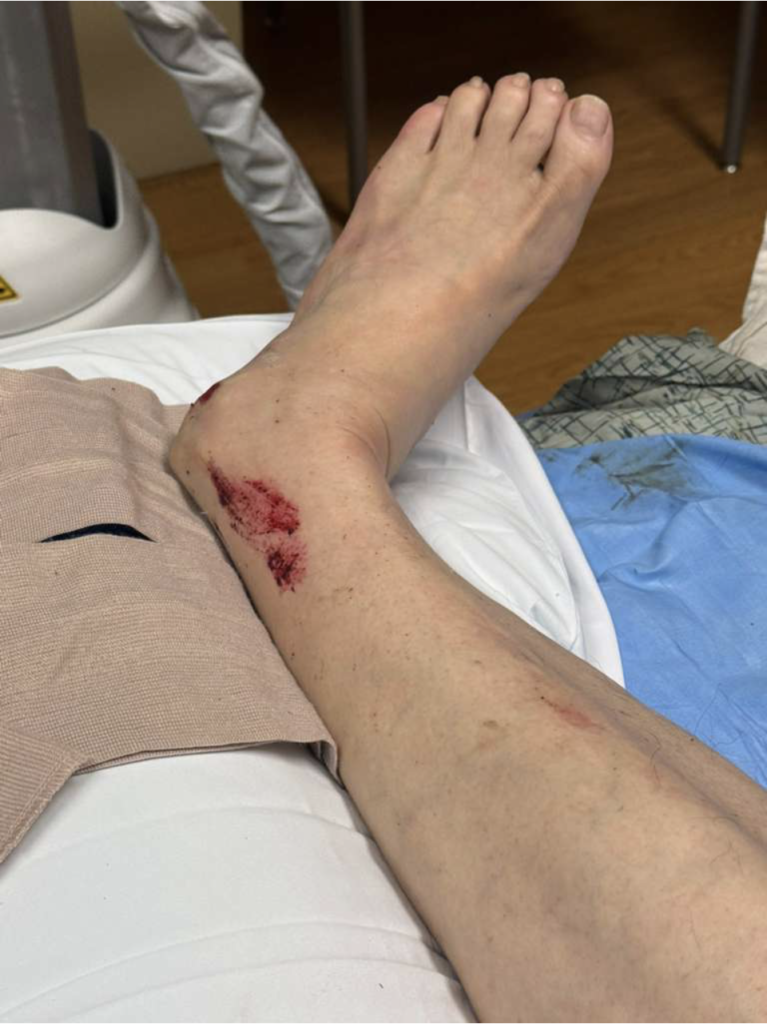
May 28th was a good day for me, I survived a potentially fatal accident. Some of the results are in the photo, above, where the expert eye might see not only the obvious dislocation but also a complete fracture of the left talus, Hawkins Grade 2.
The talus is one of those many pieces of the anatomical jigsaw you tend not to miss until it’s gone. It is the universal joint that transmits load from the lower limb to the foot, where it permits both pitch and yaw. Without it I was forced to crawl where I once ran, and use crutches to negotiate the yawning chasm between desk and doorway.
The excellent Mr Carlson fastened the talus back in place with 4 titanium screws, and I wasn’t able to put my foot down for many weeks. But the point of this article is not to bemoan my luck – in fact, quite the opposite.
Nutritionally inclined scientists often use themselves as guinea pigs because, among other reasons, it’s easier and quicker than negotiating with ethics committees. I have long experimented with different versions of the health protocol, starting many years before it became commercial. This meant that when my leg and various other parts of me went through the metaphorical mangle, I was in metabolically good shape.
Specifically, I was not in the generally pro-inflammatory mode that the modern diet and lifestyle encourages. My regime (the current health protocol) permitted and in some ways enhanced acute inflammation, while militating against chronic inflammation. My innate immune system was in good shape, I was in eubiosis. And it seemed to pay off.
The oedema after injury is an acute inflammatory response. Considering the severity of the injury, I experienced minimal oedema. The short- to medium-term pain after injury is largely mediated by an inflammatory response, and here too I was remarkably untouched. I experienced relatively little pain and was able to carry out coherent conversation until the paramedics arrived. As per policy they gave me a opioid and took me to the local orthopaedic trauma unit.
The trauma team reduced the fracture under general sedation – the ketamine / propofol combo plunged me straight into the matrix, which was fascinating – and sent me home with oxycodone. I took 10 mg, fell asleep. I took 2 x 5mg the following day and stopped altogether on day 3. From day 3 through 10 I took ibuprofen, starting with 1200 mg / day and dropping within 4 days to 200 mg.
The RICE protocol of rest, ice, compression and elevation was reduced to rest and 20 days of mild compression. A prolonged course of opiates was not needed. Neither were antibiotics, anti-diabetics, proton pump inhibitors, blood thinners, treatments for bedsores, laxatives, diuretics, calcium, vitamin D – or anything else.
By day 10 superficial healing was complete. At week 5 I could place a third of my body weight on my left leg without discomfort. At 12 weeks, X-rays showed a positive Hawkins sign. By week 13 I was using a surgical boot and now at week 14 I am walking barefoot, carefully but independently.
At age 75 this is not an entirely typical pattern of recovery, but it is more or less what I anticipated. I did not experience chronic hyper-inflammation, which impedes wound recovery (1), nor did I expect to. My innate immune system is working well (2), and it is likely that my thymus remains functional also (3). My vascular endothelium is quiescent (4), my glycemic control in order (5), all relevant anabolic co-factors are in place and I don’t smoke.
What I experienced was not an accelerated healing process, but a normal healing process.
The photo (below) shows superficial wound healing 6 days after surgery, a process which represents one of many components in successful ageing (6) and which seemingly foreshadowed the healing of deeper tissues. I must also thank James Comerford (7) for his generous gift of PEMF, which I found very helpful.
Not a zampone
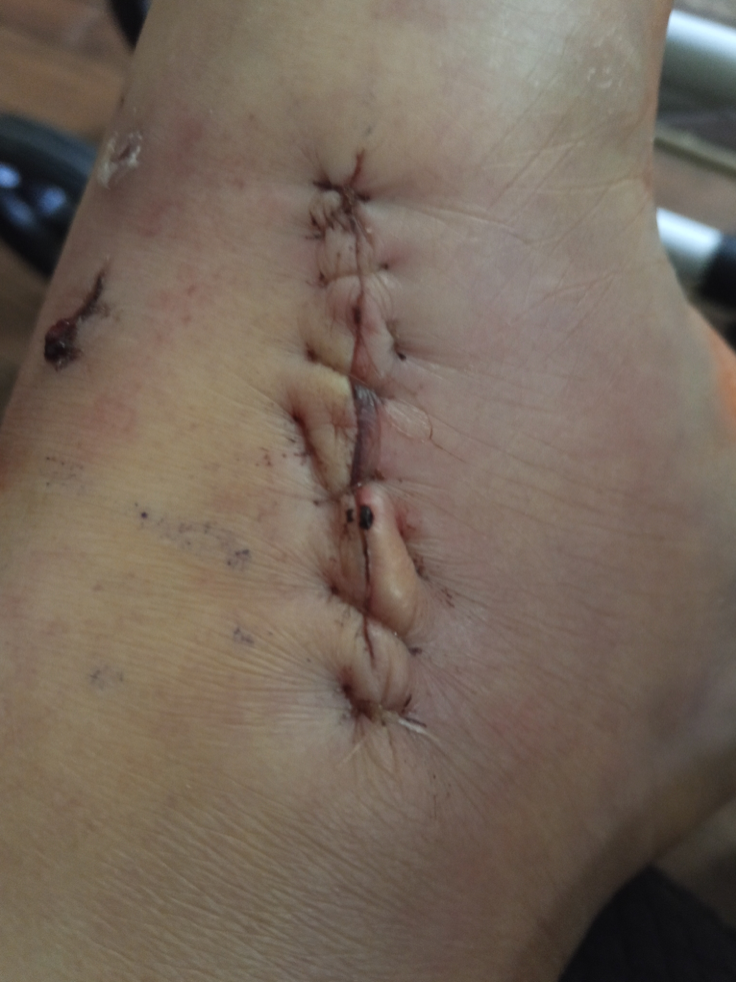
The surgeon, an excellent man, has clearly not specialised in needlepoint!
My posts and other writings are generally critical of the foundations and praxis of modern healthcare, but I have nothing but respect for frontline responders and accident and emergency medicine. These are the great triumphs of 20th and 21st century medicine.
In secondary through quaternary healthcare, however, the emphasis remains stuck on reactive medicine. If primary healthcare (and wider society) were to include pharmaconutrition in their approach, all elective surgical patients could be nutritionally prepped as I was, and the nutritional profile of the general population improved.
Hospital costs, complications and unnecessary deaths would be dramatically reduced, but there is much more. By restoring anabolic dominance – which is more likely to occur when chronic inflammation, dysbiosis, Type B malnutrition and glycative stress are neutralised – the otherwise inevitable slow march to degenerative disease will in many cases be slowed, halted or even reversed.
Based on pre-transitional health data, extensive rectification of the national diet and a return to pre-transitional nutritional values should reduce chronic degenerative disease by up to 90% (8).
Extraordinary claims like this require extraordinary evidence, which I do not have. (Sorry, Claude!) The historical data, epidemiology, pharmacology and pre-clinical findings all point in a broadly similar direction; but the medical community only believe in randomized prospective double-blinded clinical trials, and variations thereof.
The many hundreds of clinical cases in whom I see unprecedented healing do not constitute proof. They are a filtered (self-selected) sample, not a representative one. Many chronic conditions fluctuate; inflammation markers, pain, even some imaging findings wax and wane with season, regression to the mean, stress and other lifestyle changes. People who adopt a structured health protocol often also lose weight, reduce alcohol, stop smoking, change their diets and exercise more, any of which could drive improvement independent of pharmaconutrition.
My own case is important to me, but is the lowest grade of evidence. So are the many clients I have seen in whom atheroma regressed, essential hypertension abated, joint pain disappeared, stroke injury was minimised, Parkinsonism faded. I believe in test-based pharmaconutrition and I believe that my case is logical, but the data do not yet constitute clinically acceptable proof.
What is incontrovertible, however, is that the pharma juggernaut has failed absolutely to improve public health, which is in substantial decline. We need to chart a different course. And if I am right about the clinical application of pharmaconutrition, the implications are huge.
Within the USA, 90% of the nation’s $5.3 trillion in annual health care expenditures are for people with chronic and /or mental health conditions (9, 10). Systemic improvement of the national nutritional profile should therefore create savings of up to $4.3 trillion.
In the UK, caring for people with long-term or chronic health conditions accounts for approximately 70% of the total health and social care budget, corresponding to roughly £145 billion annually (11). If we could reduce this by 90% the resulting savings would be in the region of £90 billion.
These figures cannot be entirely correct because even if we can prevent the majority of chronic disease, people will still become infirm and dependent at the end of life. So let us round the savings down by approximately 30% – I’m being conservative – to $3 trillion and £70 billion respectively. I am not even allowing for the potentially substantial savings due to reduced iatrogenic illness (ie 12).
These are enormous sums, and on June 8th Robert Kennedy Jr set out to realize them. Under the government’s voluntary “Make American Healthy Again” framework, Kennedy urged medical schools to require a minimum of 40 hours of formal nutrition education, or a competency equivalent (13).
73 medical schools committed, including some of the most eminent (14), with others pending. Approximately 15% of content across all three steps of the U.S. Medical Licensing Examination (USMLE) will now assess evidence-based nutrition and clinical application (15). Starting from fall 2026, thousands of future doctors will undergo enhanced training (15).
The potential return on investment is staggering, and the scale of lost profit to the pharmaceutical and health insurance industries equally so. Given the regularity with which US and euro- politicians are bought and sold (16-18), one wonders whether this initiative or Kennedy will end first; but if public approval for the core concept remains high, it may be difficult to force this ratchet back.
As a long-time proponent of test-based pharmaconutrition, I see this as a critical step towards better public health and reduced dependence on crisis-management medicine. But there is a systemic and an institutional problem.
We are in Spenglerian deep winter and despite the advent of AI, the emphasis in medical research has shifted from the visionary to the bureaucratic, and from Kuhnian to Popperian. Consider studies such as this (19), an interesting paper which shows an interaction between a specific HLA sub-type, propensity to developing autoimmunity against interleukin 10 (an important anti-inflammatory mediator), and IBD.
But …
- This mechanism is only relevant in an estimated 3.5% of IBD patients, showing once again that most chronic degenerative conditions are syndromes rather than diseases of the type originally defined by Robert Koch.
And…
- IBD itself was uncommon until recently (20), as were most of the chronic degenerative diseases. IBD and other degenerative syndromes are increasing because many more of us have acquired risk factors including chronic inflammatory stress, dysbiosis, lost glycemic control …
One sees a similar failure of overly specific pharmaceutical attempts to achieve clinical benefits in other degenerative conditions such as Alzheimer’s (21-23). This is clearly another syndrome with multiple risk factors (ie 24) ranging from age, genetics, heart disease, diabetes, head injury, obesity, depression, hearing loss, lack of education, ‘unhealthy lifestyles’… The model of pharmaceutical specificity and rational drug design, ie looking for a specific receptor and then designing a key to fit, is inappropriate (25, 26).
We are examining branches on individual trees, while the forest invades. We should instead look to the horizon and test pharmaconutrition, to destruction if possible. This means prospective, randomized and adequately powered double-blinded clinical trials. Let us put our best foot forward.
Footnote: Talus comes from the Latin, where it means either anklebone or gaming die. My sincere thanks again to Mr Carlsson and to Stacy the talus whisperer, for helping me to win this wager.
References:
- Holzer-Geissler JCJ, Schwingenschuh S, Zacharias M, Einsiedler J, Kainz S, Reisenegger P, Holecek C, Hofmann E, Wolff-Winiski B, Fahrngruber H, Birngruber T, Kamolz LP, Kotzbeck P. The Impact of Prolonged Inflammation on Wound Healing. Biomedicines. 2022 Apr 6;10(4):856.
- https://drpaulclayton.eu/blog/innately-trained/
- https://drpaulclayton.eu/blog/1614/
- https://drpaulclayton.eu/blog/in-vein/
- https://drpaulclayton.eu/blog/an-exercise-in-bureaucracy/
- Khalid KA, Nawi AFM, Zulkifli N, Barkat MA, Hadi H. Aging and Wound Healing of the Skin: A Review of Clinical and Pathophysiological Hallmarks. Life (Basel). 2022 Dec 19;12(12):2142.
- https://replenishingtechnologies.com/about-rti/rti-best-practice-training
- Clayton P, Rowbotham J. How the mid-Victorians worked, ate and died. Int J Environ Res Public Health. 2009 Mar;6(3):1235-53.
- Buttorff C, Ruder T, Bauman M. Multiple Chronic Conditions in the United States. Rand Corp.; 2017.
- National health expenditure data: historical. Center for Medicare & Medicaid Services. Updated January 14, 2026. Accessed May 7, 2026. https://www.cms.gov/data-research/statistics-trends-and-reports/national-health-expenditure-data/historical
- Nuffield Trust. Care & Support for Long-term conditions. 25.02.26, https://www.nuffieldtrust.org.uk/resource/care-and-support-for-long-term-conditions
- Formica D, Sultana J, Cutroneo PM, Lucchesi S, Angelica R, Crisafulli S, Ingrasciotta Y, Salvo F, Spina E, Trifirò G. The economic burden of preventable adverse drug reactions: a systematic review of observational studies. Expert Opin Drug Saf. 2018 Jul;17(7):681-695.
- https://www.hhs.gov/press-room/secretary-kennedy-announces-historic-development-nutrition-accreditation-standards-new-medical-school-pledges.html
- https://med.stanford.edu/school/leadership/dean/precision-health-in-the-news/why-medica-schools-need-focus-nutrition.html
- https://www.youtube.com/watch?v=2zi9x8y9yug&t=435s
- United States Sentencing Commission: Quick Facts on Bribery Involving Public Officials. https://www.ussc.gov/sites/default/files/pdf/research-and-publications/quick-facts/Bribery_FY17.pdf
- Brennan Centre for Justice. What Is Political Corruption and What Can We Do About It? https://www.brennancenter.org/our-work/research-reports/what-political-corruption-and-what-can-we-do-about-it
- Rand Corporation, 2016. The Cost of Corruption in Europe — Up to €990 Billion (£781.64 Billion) Lost Annually. https://www.rand.org/news/press/2016/03/22.html
- Griffin H, Ceron-Gutierrez L, Gharahdaghi N, Ebrahimi S, Davies S, Loo PS, Szabo A, Williams E, Mukhopadhyay A, McLoughlin L, Irwin S, Travis S, Klenerman P, Bunn S, Cant AJ, Hambleton S, Uhlig HH, Doffinger R. Neutralizing Autoantibodies against Interleukin-10 in Inflammatory Bowel Disease. N Engl J Med. 2024 Aug 1;391(5):434-441.
- Kirsner JB. Historical aspects of inflammatory bowel disease. J Clin Gastroenterol. 1988 Jun;10(3):286-97.
- Nonino F, Minozzi S, Sambati L, Del Giovane C, Baldin E, Bassi MC, De Santis C, Gonzalez-Lorenzo M, Vignatelli L, Filippini G, Richard E. Amyloid-beta-targeting monoclonal antibodies for people with mild cognitive impairment or mild dementia due to Alzheimer’s disease. Cochrane Database Syst Rev. 2026 Apr 16;4(4):CD016297.
- van Dyck CH, Swanson CJ, Aisen P, Bateman RJ, Chen C, Gee M, Kanekiyo M, Li D, Reyderman L, Cohen S, Froelich L, Katayama S, Sabbagh M, Vellas B, Watson D, Dhadda S, Irizarry M, Kramer LD, Iwatsubo T. Lecanemab in Early Alzheimer’s Disease. N Engl J Med. 2023 Jan 5;388(1):9-21.
- Sims JR, Zimmer JA, Evans CD, Lu M, Ardayfio P, Sparks J, Wessels AM, Shcherbinin S, Wang H, Monkul Nery ES, Collins EC, Solomon P, Salloway S, Apostolova LG, Hansson O, Ritchie C, Brooks DA, Mintun M, Skovronsky DM; TRAILBLAZER-ALZ 2 Investigators. Donanemab in Early Symptomatic Alzheimer Disease: The TRAILBLAZER-ALZ 2 Randomized Clinical Trial. JAMA. 2023 Aug 8;330(6):512-527.
- https://www.alz.org/alzheimers-dementia/what-is-alzheimers/causes-and-risk-factors
- https://drpaulclayton.eu/blog/the-doctor-is-out/
- https://drpaulclayton.eu/blog/the-drugs-dont-work/